
Preface — Author's Note

“Life Loves You. Period!!!” was not written to inspire. It was written to remind.
Over the years, in countless conversations with leaders, professionals and individuals, I have sensed a common undercurrent — a quiet fatigue, a feeling that life has been unfair, unkind or just too heavy to hold.
Many of them are successful by conventional measures, and yet, deep within, they carry the question: Why does life keep testing me?
There are people who are doing everything they possibly can for their families, their careers, their businesses and their relationships, and yet find themselves experiencing a sense of suffering, disappointment or an absence of peace.
That human experience became the trigger for this reflection.
Personally, I have never questioned whether life is on my side. But through my conversations, I have witnessed how difficult it can become for people to experience life as something that supports them, particularly when circumstances are not in their favour.
And I began to wonder whether there was another way of looking at the relationship we have with life.
This article is not about convincing anyone to believe in something. It is an invitation to notice, to explore and to experience a different perspective.
If these words help you pause, reflect and experience a little more ease in your relationship with life, then the purpose of this reflection is fulfilled.
With Ease & Flow,
Kalpesh Raichura
1. When Life Feels Like an Opponent

There are days when you look around and wonder — why does everything have to be so hard?
You put in the work, you try to do the right things, and still, something or someone throws life off balance.
You do your best to be strong — the professional who holds it all together, the parent who stays steady, the leader who does not flinch.
And yet, deep inside, there is a quiet question:
Why does life keep testing me?
We do not speak this aloud often, but for many of us, that silent question sits somewhere within:
Is life really on my side?
You see it in the leader staring at the city skyline late at night, wondering if the next decision could undo everything. You see it in the young professional scrolling through seemingly perfect lives online, feeling smaller with each swipe.
You see it in parents who show up every day but sometimes feel invisible. And you see it in those who seem to have it all, but still lie awake wondering what is missing.
Somewhere along the way, we begin to experience life as something to fight, manage or conquer.
We move from living to negotiating with life.
If I work hard enough, if I earn enough, if I meditate enough, if I stay positive enough, perhaps life will finally be kind to me.
Consider your own life for a moment.
Is there an area of your life where you currently feel that you are fighting a battle? Is it your career, your business, your health, your finances or a relationship that matters deeply to you?
How much of your energy goes into dealing with the situation itself, and how much goes into questioning why the situation exists in your life?
There is a difference between the two.
One is about responding to a circumstance. The other is about questioning your relationship with life itself.
And what if that relationship could be experienced differently?
What if life has never been your opponent?
What if, even as you navigate everything that is difficult, there is another dimension of life that has been supporting you all along?
2. The Silent Intelligence That Keeps You Alive

For a moment, bring your attention away from everything that is happening in your life and towards what is happening within you.
Notice your breath.
You do not have to change it, regulate it or make it deeper. Simply notice that it is happening.
An average healthy adult at rest breathes approximately 12 to 20 times a minute. That translates to roughly 17,000 to 29,000 breaths a day at those rates.
Over a lifetime of 75 years, that could amount to hundreds of millions of breaths.
How many of those breaths have you consciously managed?
How many have you acknowledged?
Your heart beats approximately 100,000 times a day, depending on your heart rate, circulating blood throughout your body.
Your kidneys continuously filter your blood, helping regulate fluids, minerals and waste products. Your digestive system breaks down the food you consume, allowing your body to absorb nutrients and use them for energy, growth and repair.
Your liver performs hundreds of essential functions. Your immune system works to identify and respond to threats. Your body regulates its temperature, repairs tissues and responds to changes in its environment.
Trillions of cells participate in this extraordinary coordination.
And most of it happens without requiring your conscious attention.
Think about what happens when you go to sleep.
For several hours, you withdraw from your conscious engagement with the world. And when you wake up, you generally remember where you are, who you are, the people you love, the work you do, the languages you speak, the music you enjoy and the skills you have developed over decades.
Sleep itself supports memory consolidation and many of the processes that help your body and mind function.
You do not wake up every morning having to learn your entire life again.
Consider the magnitude of what is happening.
You may have spent the previous evening worrying about a business decision, an argument with someone you love or a presentation that did not go well.
While your attention was occupied by those concerns, an entire ecosystem within you continued its work.
This does not mean that the body is invincible. It has limitations. It can become exhausted, injured or unwell. It needs nourishment, rest, care and sometimes medical intervention.
And perhaps that makes what it does every day even more worthy of acknowledgement.
Now, expand your perspective beyond your own body.
There are more than eight billion human beings on this planet. We are not even taking into consideration the countless other species that inhabit the earth.
An extraordinary network of natural systems makes our collective existence possible.
Plants, algae and other photosynthetic organisms contribute to the oxygen cycle. Water circulates through the atmosphere, land and oceans. Sunlight provides energy that supports ecosystems and food production.
Access to clean water, nutritious food and healthy living conditions is tragically unequal. Millions of people struggle for necessities that others may take for granted.
Yet the interconnected systems that make life possible remain remarkable.
Consider the glass of water you drink.
The food that arrives on your plate.
The ability to recognise the face of someone you love.
The sensation of warmth when sunlight touches your skin.
The ability to learn something today that you did not know yesterday.
How much of what sustains your existence do you consciously acknowledge?
We spend considerable time assessing what life has not given us. Perhaps it is equally worthwhile to spend some time noticing what makes it possible for us to be here in the first place.
You may call it biology, nature, evolution, intelligence or simply existence.
You do not have to give it a particular name.
But you can admire it.
And through the lens of this article, you might even experience it as one of the quietest expressions of life's love.
3. The Myth of the Divided Life

We have learned to live in fragments.
Work life. Home life. Family life. Social life. Vacation life.
We have even divided joy — saving it for weekends, holidays or milestones.
The rest becomes survival: duties to get through, responsibilities to bear, routines to repeat.
We say things like:
“I will enjoy life when I retire.”
“I will breathe once this project ends.”
“I will rest after the next milestone.”
“I am just waiting for my next vacation.”
Somewhere, we have developed a relationship with our everyday existence in which most of it becomes something to get through, so that we can occasionally experience what we call living.
Imagine a professional who spends months looking forward to a ten-day holiday.
There is excitement in planning the destination, booking the tickets, choosing the hotel and imagining the experiences that await.
During those ten days, this person notices the sunrise, enjoys breakfast without rushing, takes photographs of beautiful surroundings, has conversations with family and perhaps sleeps without thinking about the next day's meetings.
And then comes the return journey.
Even before reaching home, the mind has moved towards Monday morning, the pending emails, the business reviews and the responsibilities waiting to be addressed.
The holiday becomes a cherished memory. The next holiday becomes something to look forward to.
And the months in between?
They become the price we pay for those few days of feeling alive.
There is nothing wrong with travel, adventure, celebration or socialising. These can be wonderful expressions of life.
But there is something worth exploring when they become our primary means of escaping the life we otherwise experience.
The same applies when we begin to depend on a drink at the end of the day, a party over the weekend or an occasional retreat to experience the relief that seems unavailable in our ordinary lives.
The question is not whether we should stop enjoying these experiences.
The question is whether we can expand the experience of being alive beyond them.
Consider the last seven days of your life.
How much of that time would you describe as living, and how much would you describe as getting through life?
When was the last time you enjoyed an ordinary meal without simultaneously thinking about something else?
When was the last time you listened to someone you love without preparing your response, checking your phone or mentally moving towards your next responsibility?
When was the last time you noticed that you were alive, without needing a special occasion to remind you?
Perhaps the challenge is not that everyday life lacks beauty.
Perhaps we have gradually stopped being available to experience it.
Real life does not happen only during vacations, celebrations and grand adventures.
It is also happening in the kitchen, in the car, during a conversation, while waiting for someone, while working on something meaningful and while sitting quietly at the end of an ordinary day.
The extraordinary possibility is that we may not need to escape our lives in order to experience them.
4. The Emotional Weather of Being Human

It is natural to resist pain, to wonder why things go wrong and to wish that life could be more peaceful.
The loneliness, anxiety, exhaustion, fear, insecurity and overwhelming thoughts that people experience are real.
The professional who fears losing a job is not imagining the financial responsibilities that depend on that income.
The entrepreneur who has invested years into building a business is not exaggerating the uncertainty of seeing it struggle.
The parent who feels disconnected from a child is experiencing something deeply personal.
The person lying awake at night, repeatedly thinking about an unresolved situation, may genuinely be exhausted by the experience.
There is no intention in this article to dismiss any of these realities.
Nor is there an expectation that a different perspective will immediately remove anxiety, resolve grief or eliminate the need for professional support.
Therapy, medical treatment, music, exercise, meditation, companionship and rest can all have meaningful places in our lives.
The question is whether, alongside these forms of support, we can develop a different relationship with what we experience.
Emotions are part of being human.
They can sometimes tell us something about our needs, our circumstances, our expectations or the significance of what is happening.
Anxiety may draw our attention to uncertainty. Loneliness may reveal a longing for connection. Exhaustion may indicate that we need rest or that the demands placed upon us have become unsustainable.
Sometimes, however, emotions persist without an obvious explanation and require more specialised care.
We do not have to interpret every emotion as a message. Neither do we have to treat every uncomfortable emotion as an enemy.
Think of something that has been emotionally occupying you recently.
Can you acknowledge what you are feeling without immediately concluding that something is wrong with you, or that life has been unfair to you?
Can disappointment simply be disappointment for a while?
Can sadness be given the space it deserves without becoming a judgement about your entire existence?
Can you experience fear and still recognise that there may be support available to you?
There is something profoundly human about allowing ourselves to feel without demanding that every feeling disappear.
Being at ease does not necessarily mean being happy all the time.
It can also mean being able to remain connected with yourself while experiencing the full range of what it means to be human.
5. When Life Doesn't Feel Loving

There are moments when life hurts.
Not in a philosophical sense. Not in a way that can be addressed through a positive thought or a few words of reassurance.
It hurts in ways that change the very fabric of our existence.
When someone you love dies.
When a flood destroys a home that took decades to build.
When an accident changes the course of a family's future.
When a medical diagnosis brings uncertainty into an otherwise ordinary day.
When a relationship you have invested yourself in begins to fall apart.
When you lose a job, face significant financial losses or discover that something you trusted was not what you believed it to be.
There are moments when a parent and child stop speaking to each other. When a marriage becomes a place of silence. When friendships that once felt permanent begin to disappear.
There are leaders who have invested decades in their organisations and suddenly find themselves facing an inquiry, an audit, a difficult allegation or the possibility of losing everything they have worked for.
There are entrepreneurs who have given years of their lives to a business and find themselves sitting alone, wondering whether they have the energy to continue.
There are people who have done everything they knew to do and still experienced rejection.
In these moments, the question becomes understandable:
If life loves me, why is this happening to me?
It would be insensitive to respond to that question by simply asking someone to be grateful.
It would be equally insensitive to suggest that every tragedy happens for a reason, that every loss is a blessing in disguise or that suffering is something we have invited into our lives.
Some experiences are devastating. Some losses are irreversible. Some circumstances are unjust.
There is no denying that.
Life can be extraordinarily difficult, and acknowledging that difficulty is not a contradiction of the perspective being explored in this article.
What we are exploring is something different.
Can the circumstance be painful without requiring us to conclude that life itself is against us?
Can we acknowledge that something has happened which we never wanted to happen, without making that event the sole definition of our relationship with life?
Consider someone who has lost a job.
There may be fear about the future, disappointment about how the situation was handled, anger towards the organisation and genuine concerns about financial commitments.
All of these deserve attention.
But alongside dealing with the situation, the person may also begin to carry another burden:
“Life has been unfair to me.”
“Nothing ever works out for me.”
“Every time I try, something goes wrong.”
“I am tired of fighting with life.”
The loss of the job is one reality.
The relationship with life that begins to emerge from that experience is another.
And it is in this second dimension that a different perspective may become available.
What if, without denying the difficulty of the situation, the person were to operate from the possibility that life is not their enemy?
What might they notice differently?
Would they be more available to receive support? Would they explore opportunities that they had previously dismissed? Would they have a conversation that they had been postponing?
Would they allow themselves to rest, seek help or reconsider what matters to them?
None of this guarantees another job. None of it makes the original experience fair.
But it may change the experience of navigating what comes next.
The same possibility exists in our relationships.
When we feel misunderstood by someone we love, our instinct may be to defend ourselves, prove our intentions, withdraw or repeatedly revisit everything that the other person has done wrong.
What becomes possible if we acknowledge the hurt and then approach the situation without the additional assumption that life is conspiring against our happiness?
Perhaps we listen differently.
Perhaps we express something that has remained unspoken.
Perhaps we recognise that a boundary needs to be established.
Perhaps we accept that a relationship cannot be restored in the way we had hoped.
And when it comes to grief, there may be no immediate perspective to adopt, no lesson to discover and no action to take.
There may simply be a need to grieve.
The possibility of experiencing life differently can wait until we are ready.
You do not need to celebrate a loss to acknowledge that something meaningful may still remain in your life.
You do not need to understand why an event happened to begin exploring how you might live from here.
And you do not need to become a rebel, summon extraordinary willpower or prove your strength to anyone.
Sometimes, being gently present to the cycle of life is enough for that moment.
The invitation is not to call the painful event an expression of love.
It is to remain open to the possibility that pain and the experience of being supported by life can coexist.
6. Does Life's Love Always Have to Be Silent?

While discussing this article with Shalaka, a beautiful question emerged.
Why is life's love always described as silent? Why can it not be loud, visible and right in front of us — as loud as despair, grief or a significant business loss?
It is a question worth exploring.
Because perhaps life's love has been loud on many occasions. We simply have not recognised those occasions in the same way.
Consider when we tend to question life.
Do we question life when we are getting married to the person we love?
When we are buying our first home?
When we welcome a child into our family?
When we receive a promotion that we have been working towards for years?
When our business begins to flourish?
When a medical report brings reassuring news?
When a long-awaited opportunity finally arrives?
When someone we love tells us how much we mean to them?
In many of these moments, we are celebrating.
We are experiencing excitement, fulfilment, connection, relief and joy.
We share the news with our friends and families. We take photographs. We create memories. We celebrate achievements and milestones.
Through the lens of this article, these are some of the loudest ways in which life might be saying:
“I love you. I have got you.”
And yet, interestingly, we rarely sit down in those moments and question the intent of life.
We acknowledge our hard work, our intelligence, our perseverance, the people who helped us, the timing or perhaps our good fortune.
All of these acknowledgements are meaningful.
But when something happens that is not in our favour, we often extend our interpretation beyond the circumstance itself.
We begin to question life.
Why me?
Why now?
Why does this always happen to me?
Why is life so unfair?
Perhaps there is something interesting in this asymmetry.
When life unfolds in accordance with our expectations, we celebrate the outcome.
When life unfolds differently, we sometimes question the relationship.
Imagine applying the same approach to a friendship.
We acknowledge the friend when they disappoint us, question their intentions when something goes wrong, but rarely recognise the countless occasions when they have been present, supportive and available.
Over time, our perception of that relationship may become disproportionately shaped by its difficult moments.
Could something similar be happening in our relationship with life?
Bring to mind five moments from your own journey when you experienced immense joy, relief, achievement or connection.
They need not be significant by anyone else's standards.
Perhaps it was the first salary you received.
The moment someone said yes to spending their life with you.
The day you held your child.
The conversation that restored a friendship.
The opportunity that arrived when you needed it most.
How did you experience life in those moments?
Did you question its intent?
Did you acknowledge its presence?
Life's love, through this perspective, need not always be silent.
Sometimes it is loud enough to bring tears of joy.
Sometimes it is visible enough to become a photograph that stays with us for decades.
Sometimes it is an achievement that we celebrate with hundreds of people.
And sometimes it is simply the next breath.
The silence is not necessarily an absence of love. It may be the part of life that continues to sustain us between its more visible celebrations.
Perhaps both deserve our attention.
7. The Quiet Miracles We Forget
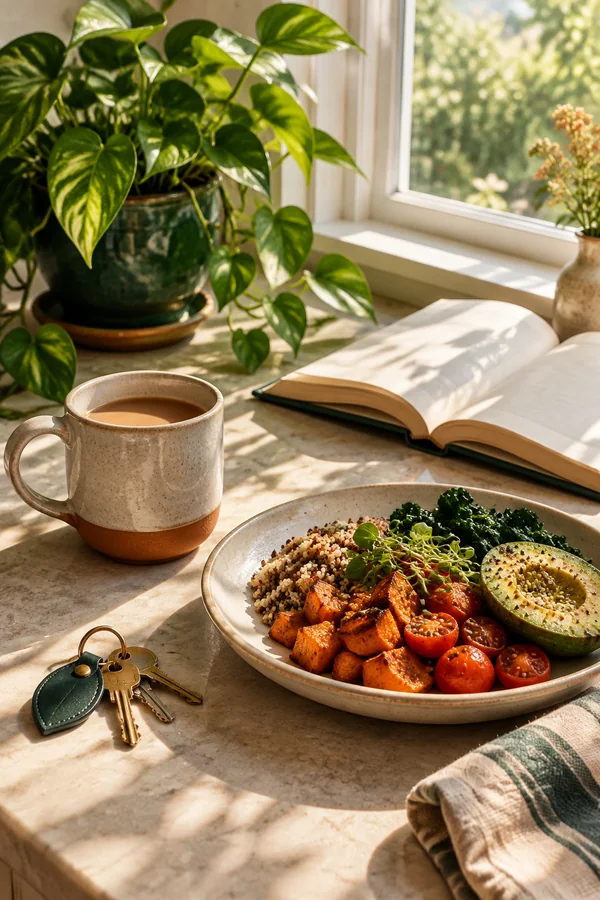
An interesting aspect of being human is how quickly the extraordinary can become ordinary.
Something we once desperately wanted becomes something we barely notice once it is available to us.
The home we worked towards for years becomes the place where we complain about maintenance.
The job we celebrated becomes the job we complain about on Monday morning.
The relationship we once longed for becomes the relationship in which we focus on everything the other person does not do.
The child whose arrival transformed our lives becomes the child we constantly worry about, correct or compare.
This does not mean that our concerns are invalid.
Homes need maintenance. Jobs can become demanding. Relationships require attention. Parenting can be challenging.
But in becoming occupied with what needs to change, we can gradually lose our connection with what is already present.
Think about the people, experiences and capabilities that are part of your life today.
How many of them were once wishes?
How many of them were things you hoped would become possible?
How many of them would you deeply miss if they were no longer available tomorrow?
We can have a family without experiencing connection.
We can have a meal without experiencing nourishment.
We can have a beautiful home without experiencing comfort.
We can have achievements without experiencing fulfilment.
We can have an entire day of life without consciously experiencing being alive.
Perhaps acknowledgement is one of the simplest ways to bridge that distance.
Not forced gratitude. Not a requirement to be positive.
Simply noticing what is here.
The person who checked on you.
The ability to complete something meaningful.
The music that brought back a memory.
The meal that someone prepared.
The conversation that made you laugh.
The body that carried you through another day.
What did you overlook today because your attention was occupied by what was missing?
And what might you experience differently if, alongside your concerns, you were also present to what continues to support you?
8. Changing the Question

Perhaps the question is not only:
Does life love me?
Perhaps another question is:
Am I available to experience the ways in which life supports me?
This is not an attempt to replace one rigid belief with another.
It is an exploration of what becomes possible when the starting point of our relationship with life changes.
Imagine approaching an important conversation from the assumption that the other person is against you.
Notice how that assumption might influence your tone, your listening, your interpretation of their words and your readiness to defend yourself.
Now imagine approaching the same conversation without that assumption.
The subject of the conversation has not changed. The disagreement may still exist. The outcome remains uncertain.
But the place from which you engage has changed.
Something similar may be possible in our relationship with life.
If we operate from the assumption that life is constantly testing us, we may find ourselves preparing for another battle even before we understand the situation in front of us.
We may become so occupied with protecting ourselves, proving ourselves or anticipating what might go wrong that we miss what is actually available.
What if we were to experiment with another starting point?
Life loves me. Now, what is the possible way forward?
A difficult business decision still needs to be made.
A strained relationship still needs attention.
A financial concern still requires practical action.
A health issue still needs appropriate care.
But perhaps we can engage with these realities without experiencing every one of them as an attack on our existence.
Reflect on an area of your life that currently matters to you.
What is the situation you are dealing with?
What have you begun to believe about life because of that situation?
If you were to temporarily set aside that interpretation and operate from the possibility that life is not against you, what might become available?
You may discover another action.
You may recognise the need for a conversation.
You may realise that you have been trying to control something that is not entirely within your control.
You may discover that what you need is not more determination, but support.
You may also discover that nothing needs to change immediately, except the space you give yourself to experience what is happening.
The shift is not necessarily from effort to surrender.
It is from fighting with life to engaging with life.
There can still be determination, ambition, courage and persistence.
But they need not emerge from a constant need to prove that you deserve to exist, succeed or be loved.
9. The Ease & Flow Lens — Living with Awareness

Ease & Flow is not about everything becoming easy.
It is about exploring how we can remain connected with ourselves, with others and with what matters to us while navigating the realities of life.
The following are not instructions for becoming happier. They are small experiential invitations.
Try them if they feel relevant. Notice what they create for you.
1. Experience a Breath
At some point during your day, bring your attention to a natural breath.
Do not attempt to improve it. Do not make it another exercise that you need to perform correctly.
Simply notice that you are breathing.
For those few seconds, you do not have to accomplish anything, resolve anything or become anything.
You are alive.
There is something extraordinary about being available to that simple experience.
2. Be Present to the Ordinary
Choose one ordinary experience in your day.
Drinking a cup of tea. Having a meal. Walking towards your car. Listening to music. Sitting with someone you love.
For a few moments, allow yourself to experience it without mentally moving towards what needs to happen next.
Notice the temperature, the sounds, the sensations or the presence of the person with you.
You are not creating a special moment.
You are becoming available to a moment that already exists.
3. Acknowledge Three Things
Before becoming occupied with what needs to change in your life, acknowledge three things that are already available to you.
They can be simple.
A capability you possess.
A person who is part of your life.
Something your body allows you to experience.
A conversation that mattered.
An opportunity to begin again.
You do not have to write them down unless you wish to.
The intention is not to compare your life with someone else's or convince yourself that you should be happy.
It is simply to recognise that what is missing is not the entirety of what exists.
4. Explore a Different Response
When you encounter a difficult situation, give yourself a little space before responding, wherever circumstances allow.
Acknowledge what has happened and what you are feeling.
Then explore this question:
If I were to operate from the perspective that life is not against me, what would be a meaningful response to this situation?
The response may involve taking action, having a difficult conversation, seeking professional help, setting a boundary or simply allowing yourself some time.
The intention is not to avoid the situation.
It is to engage with it without carrying more struggle than the situation itself requires.
5. Acknowledge the Day
At the end of the day, before moving into tomorrow's concerns, acknowledge that you have experienced another day of life.
It may have been a wonderful day.
It may have been an exhausting day.
It may have been a day you would never wish to repeat.
You do not have to describe it as beautiful if it was not.
Simply acknowledge that you were here.
That you experienced something.
That, in whatever way was possible, you participated in life.
And if it feels natural, you may wish to say:
Thank you, Life, for another day of being alive.
These experiences need not become another routine that you feel pressured to maintain.
Their purpose is to bring you closer to your own life, not to add another obligation to it.
10. Living Loved, Leading Alive

When leaders, teams and families begin to explore life through this perspective, something meaningful can shift.
There is more room for clarity amidst stress, curiosity amidst disagreement and connection amidst uncertainty.
Consider what happens when a leader enters a business review already experiencing the situation as a threat.
A missed target may become a personal failure. A question may be interpreted as a challenge to authority. A disagreement may become something to win.
The leader may spend considerable energy defending, justifying, proving or controlling.
Now consider the possibility of the same leader entering the conversation from a place of greater inner ease.
The missed target still needs attention. Accountability still matters. Difficult decisions may still be necessary.
But the conversation can become more focused on understanding what happened, what is required and what becomes possible from here.
The leader does not have to abandon ambition to experience ease.
Nor does the organisation have to compromise performance to create a more connected human experience.
The same possibility extends into our families and relationships.
When we are not constantly occupied with protecting our own sense of worth, we may become more available to listen.
When we are not interpreting every disagreement as a rejection, we may become more capable of expressing what matters.
When we are not waiting for life to become perfect before experiencing peace, we may discover a different quality of engagement with our everyday responsibilities.
That is at the heart of Ease & Flow Dialogues™.
It is a space where individuals and leaders explore their relationship with pressure, presence, perspective and progress.
It is a dialogue that begins within you and then flows outward, shaping your leadership, your relationships and the culture you contribute to creating.
Through Ease & Flow Dialogues™, our intention is to help individuals and leadership teams experience three meaningful outcomes:
Being at Ease
Remaining calm and centred through challenges, without becoming consumed by overthinking, fear or endless possibilities of what might go wrong.
Building Cohesive Conversations
Expressing what matters, resolving what is at hand and strengthening relationships without constantly needing to defend, justify or prove oneself.
Creating Meaningful Flow
Moving intentions into action, even in the presence of uncertainty, resistance or a lack of complete clarity.
If this reflection has resonated with you, consider this a gentle invitation to connect with us.
Whether you wish to explore this journey for yourself, for your leadership team or for the organisation you are building, we would be happy to have a conversation.
Together, we can explore what it would mean to make Ease & Flow not merely an occasional experience, but a way of living and leading.
Because when a leader begins to experience life differently, the impact can extend far beyond that individual.
It can influence the quality of conversations, the relationships within teams, the way challenges are navigated and the experience of the people around them.
Perhaps that is how meaningful transformation begins — from the inside out.
Let us explore what Ease & Flow could mean for you and your leadership.
Explore Ease & Flow for Yourself or Your Leadership Team
Whether you are exploring a different way of experiencing your own life or looking to create a more cohesive, centred and effective leadership culture, let us begin with a conversation.
Let's Have a Conversation11. Closing Reflection

Life loves you. Period!!!
Not because you have earned it.
Not because you have done everything right.
Not because everything in your life is perfect.
But because, through the perspective we have been exploring, your very existence offers something extraordinary to acknowledge.
The breath you are experiencing.
The capabilities you have developed.
The relationships that have shaped you.
The opportunities you have received.
The celebrations that have brought you joy.
The support that has been available to you in ways you may or may not have noticed.
And the possibility of continuing to participate in life, even when its circumstances are not what you had hoped for.
This article is not a declaration of an ultimate truth.
It may not be the best perspective.
It may not even be the right perspective for everyone.
It is simply a possible perspective.
A lens through which you might explore your relationship with life and discover whether it creates a little more ease, connection and freedom in the way you experience your existence.
There will be circumstances that you cannot change.
There will be losses that cannot be reversed.
There will be questions that may never find satisfactory answers.
And there will be experiences that require time, support, healing and care.
We do not always get to choose what happens to us, how deeply it affects us or how long it takes to recover.
But, when we are ready, we may discover that we have some choice in the relationship we continue to build with life.
We can explore whether we want our experience of life to remain defined entirely by what has hurt us, what has disappointed us or what has not gone according to our expectations.
Or whether, alongside acknowledging those realities, we can also become available to what remains, what sustains us and what might still be possible.
Neither perspective changes the past.
But the perspective from which we engage with the present can influence the experience of what comes next.
Perhaps you do not need to fight harder.
Perhaps you do not need to prove anything.
Perhaps you do not need to wait for the next vacation, the next promotion, the next financial milestone or the next celebration to experience the joy of being alive.
Perhaps you can begin experiencing it in the life that is already here.
You do not have to understand everything that happens.
You do not have to agree with everything that happens.
And you certainly do not have to pretend that everything that happens is good.
But you can remain open to the possibility that life is not your opponent.
And that, even in the midst of everything you are navigating, there is something remarkable about the fact that you are here, experiencing this extraordinary phenomenon called life.
Notice your next breath.
Notice the world around you.
Notice the people, the possibilities and the experiences that are still available to you.
And perhaps, for a moment, allow yourself to experience life through this lens:
Life Loves You. Period!!!
Ease & Flow Dialogues™
Our mission is to make Ease & Flow a reality in Life & Leadership.
Kalpesh Raichura
Founder, Connect Quotient & Ease & Flow Dialogues™
About Ease & Flow Dialogues™
Ease & Flow Dialogues™ helps senior professionals and business owners develop presence, perspective, resilience and conscious choices — so they can meet life and leadership as they unfold.
Explore Ease & Flow Dialogues